America's Secondhand Phone Market Is Booming. Nobody Can Tell You How Big It Is.
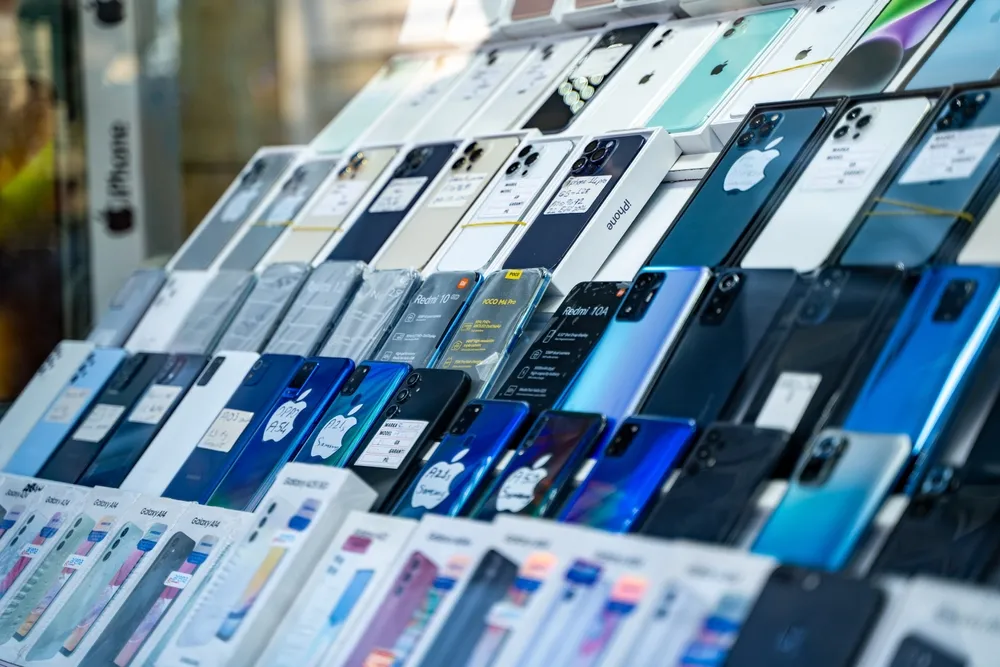
Reselling a phone is the single most effective circular-economy action available to an ordinary American. It keeps a manufactured object in use, which is where almost all of its environmental cost sits, and it pays the owner for the privilege. The market that does this is large and growing.
How large is a question nobody can answer with confidence, and the reason why says something about how circular economy claims get made.
What the numbers say
Here are published estimates for the United States, all for 2025:
- 88.87 million units, growing above 4.8% annually to 112.35 million by 2030 (Mordor Intelligence)
- $15.26 billion, reaching $49.58 billion by 2035 (Market Research Future)
- $15.26 billion, reaching $47.40 billion by 2035 (SNS Insider)
Globally the spread is wider. One firm puts the used and refurbished market at 290 million units in 2025. Another values it at $66.54 billion, a third at $39.12 billion — estimates of the same thing differing by nearly a factor of two.
Two things in that list deserve attention.
The first is that two firms report an identical US base of $15.26 billion and then diverge by more than $2 billion over the following decade. An exact match to the cent is not independent measurement. It suggests a shared underlying source, or one firm citing the other, presented in both cases as proprietary research.
The second is that one of those firms gives its own compound growth rate as both 12% and 12.5% within a single summary. That is not a rounding disagreement between analysts. It is an internal inconsistency in a document sold as market intelligence.
Why they disagree
Three reasons, none of them scandalous, all of them reasons to treat the figures as indicative rather than factual.
Scope. “Refurbished” and “used” are not the same market. A professionally tested, warrantied device sold by a certified refurbisher and a phone handed over on a marketplace are different transactions with different prices. Some reports cover the first, some both, and the definitions are rarely stated precisely enough to reconcile.
Units versus value. A market can grow in units while shrinking in value, and secondhand phones are exactly where you would expect that: volumes rise as devices last longer, while the resale price of an individual handset falls as it ages. Unit forecasts around 5% annual growth and value forecasts around 12% describe different claims about the same market, and cannot simply be reconciled.
Nobody official is counting. There is no government statistic for US secondhand phone sales. No agency collects it, no reporting obligation produces it. Everything above is a commercial research product, usually sold rather than published, with the methodology behind a paywall.
That last point is the one that matters. We ran into the same wall writing about America’s e-waste recycling rate, where the most recent national figure is from 2018 because no law requires a newer one. The secondhand market has the same gap for the same reason.
The number that is solid
One figure in this area is well-evidenced, and it does not describe the market’s success.
Researchers at the Rochester Institute of Technology and the University of Waterloo surveyed 4,000 US consumers about what they actually did with unwanted electronics. 39% were simply stored. About one in ten were recycled, and roughly the same share resold.
Read that against the market estimates. The commercial reports describe a growing resale economy; the academic survey finds that the most common destination for a retired device is a drawer. Both can be true — a market can grow while remaining a minority outcome — but only one of those findings is based on asking people what they did.
Supporting figures point the same way. The average American household is estimated to hold 1.8 unused smartphones. A consumer survey found 37% of Americans trade in or exchange old devices and 25% sell them, which sounds healthier, though self-reported intent and measured behaviour rarely match.
Why phones stay in drawers
The same research identified what predicts hoarding, and the answers are practical rather than ideological.
People who worried that personal data might be exposed were more likely to keep a device. So were people who did not know where to recycle it. Neither is irrational: a phone is the most data-dense object most people own, and “somewhere, eventually” is a reasonable answer when the alternative requires research.
This reframes the problem. The barrier to reuse is not that Americans are unaware recycling exists, or that resale channels are missing. It is that the first step — being confident the device is wiped and knowing where it goes — is the part nobody has made frictionless.
What is actually at stake
The environmental case for reuse over recycling is unusually clear-cut, because of where a phone’s footprint sits.
Across manufacturer reports and independent analyses, manufacturing accounts for roughly 75–85% of a smartphone’s lifetime emissions. Apple’s own figures put manufacturing at 85% of the iPhone 6’s roughly 95 kg lifecycle footprint and 77% for the iPhone 8; an analysis of the Galaxy S23 Ultra put production at 85.3%. A 2026 estimate gives 80–85% for production, logistics and end-of-life combined.
The exact number varies by model and methodology, and we would not lean on any single one. The direction does not vary. Almost all of a phone’s environmental cost is incurred before it is first switched on.
That makes reuse and recycling categorically different interventions. Recycling recovers some materials and destroys the manufactured value entirely. Reuse preserves it. A phone that finds a second owner displaces the production of a new one, which is the only action in this area that avoids emissions rather than mitigating them.
This is the same asymmetry we found in aluminium, in reverse. There, recycling retains the material’s value and the obstacle is sorting. Here, recycling destroys most of the value, and the obstacle is getting the device out of a drawer while it still works.
The replacement cycle is helping
One trend runs in the right direction without anyone legislating it.
Phones are being kept longer. Survey data finds 23% of users keeping a handset three to four years, and 21% upgrading only when the device breaks — a marked change from the roughly 18-month cycle reported a decade ago. Longer ownership means fewer devices manufactured per person per decade, which is worth more than any recycling rate.
It also has a second-order effect on the resale market that the growth forecasts tend to gloss over: a phone kept for four years enters the secondhand market older, cheaper and closer to the end of its software support. Volume can rise while the value and usable life of each traded device falls.
What to do with a phone you are not using
The order of preference follows directly from where the footprint sits.
Sell or pass on a working device. This is the highest-value outcome and the most time-sensitive, because resale value falls continuously. Carrier trade-in, marketplaces, and buyback services all work; buyback services such as Gadget Salvation quote on used devices including damaged units, which matters because a cracked screen removes a phone from most peer-to-peer markets without removing its component value.
Repair a repairable one. The right to repair laws now in force in several states are aimed at exactly this gap, though enforcement is early.
Recycle only what is genuinely dead, and use a certified recycler.
Whichever route, wipe the device first. The research says data anxiety is a leading cause of hoarding, so this is not a footnote — it is the step that unblocks the rest.
What would settle it
A national statistic, on a stated scope, published annually. Units and value separately, refurbished and used distinguished.
It does not exist, and no obligation would produce it. Until it does, every claim about the size or growth of American phone resale — including the favourable ones — rests on commercial estimates that disagree with each other and occasionally with themselves.
The uncomfortable part
The secondhand phone market is probably the most successful circular-economy story in consumer electronics. Devices are kept longer, resale is normal rather than niche, and the environmental logic is sound.
We cannot show you that with a reliable number, and neither can anyone else. The best-evidenced finding in this entire area is that 39% of unwanted devices are sitting in a drawer — a measurement of the failure, produced by academics asking people directly, while the success is described by firms selling forecasts that match each other to the cent.
Sources: market size and growth figures from Mordor Intelligence, Market Research Future and SNS Insider, all commercial research products whose methodologies are not public, and which are reported here as the estimates they are; consumer behaviour from a 4,000-respondent survey by researchers at the Rochester Institute of Technology and the University of Waterloo; manufacturing emission shares from Apple Product Environmental Reports and independent lifecycle analyses, which vary by model and method. Where sources disagree we have said so rather than choosing one.