Europe Made Textile Collection Mandatory. The Collectors Are Going Bust.
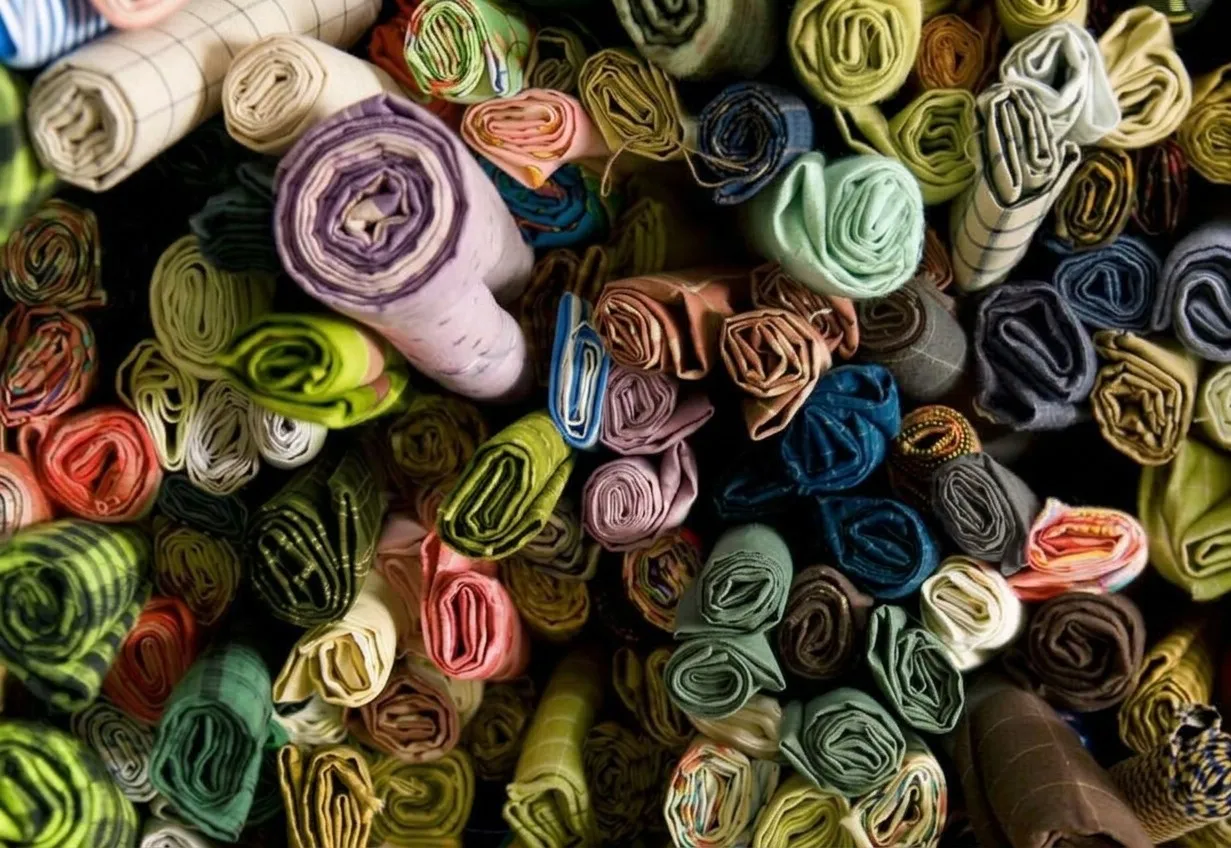
Since 1 January 2025, every EU member state has been required to collect used textiles separately from household waste. On paper it is exactly the right instrument: stop burning clothes with the rubbish, capture the material, feed it back into the economy.
Eighteen months on, major textile collectors are filing for insolvency, a French collector dumped unsorted bales outside shops in protest, and the European Environment Agency expects the policy’s main measurable effect to be an increase in exports.
A mandate to collect is not a mandate to do anything with what you collect.
The scale of the material
The EEA put EU textile waste at roughly 6.95 million tonnes in 2020, about 16 kg per person. Of that, only 4.4 kg per person was collected separately for reuse or recycling. The remaining 11.6 kg went into mixed household waste — which in practice means incineration or landfill.
Commentary in early 2026 put the separately collected share at just over 20% of textile waste generated across member states. Headline percentages move a lot depending on whether you count only post-consumer clothing or all textile waste including industrial, so treat any single figure as definition-dependent.
There is almost nowhere for it to go
Here is the number that governs everything else: fibre-to-fibre recycling remains below 1% globally. Almost no discarded clothing becomes new clothing.
What happens to collected textiles instead, by most sector estimates: roughly 50–75% is reused and 10–30% recycled — and “recycled” here overwhelmingly means downcycling into insulation, wiping cloths or mattress filling, not new garments. A European Commission Joint Research Centre study found collected material split roughly 40% sorted for re-wear inside the EU, with about 22–23% each going to reuse outside the EU and to open- or closed-loop recycling.
The technical obstacle is blends. A polyester-cotton shirt is not polyester and is not cotton, and separating the two at scale and at cost is not a solved problem. Add elastane, dyes, coatings, prints and mixed-fibre trims and most garments are, chemically speaking, a composite designed without any thought for disassembly.
This is the same failure as aluminium’s alloy problem, with none of aluminium’s advantages: no high-value metal at the end to pay for the sorting.
So the collection system is failing
Mandating collection into a market with no demand does something predictable to prices. Supply rises, the value of collected textiles falls below the cost of collecting them, and the people doing the collecting go under.
That is now happening:
- SOEX, one of Europe’s largest textile collectors and sorters, filed for insolvency in October 2024 — before the mandate even began
- Texaid Deutschland placed its subsidiaries Resales and Texaid Collection into insolvency proceedings in 2025
- In France, Le Relais suspended collection operations in mid-2025 and unloaded unsorted textile waste outside major retailers in protest at inadequate funding
The stated cause across these cases is the same: the per-tonne compensation from eco-organisations and public authorities does not cover operating costs.
Sweden showed the pattern early — overloaded collection points, charity shops functioning as unpaid pre-sorting infrastructure for municipalities, and large quantities of separately collected textiles still being incinerated after basic sorting. Collected, counted, burned.
The money arrives two years late
The mechanism that was supposed to pay for all this is extended producer responsibility, and it is running behind the obligation it was meant to fund.
A revision to the Waste Framework Directive, in force since 16 October 2025, requires every member state to establish mandatory EPR schemes for textiles and footwear within 30 months of transposition. Fees fall on anyone placing textiles on the EU market — including online sellers and non-EU brands — and are modulated so that more durable, repairable and recyclable products pay less.
Sources disagree on when schemes actually become operational, with estimates ranging from 2027 to April 2028.
Either way the sequencing is the problem. Collection became compulsory in January 2025. The funding mechanism arrives two to three years afterwards. That interval is not an administrative detail — it is precisely the window in which the collectors are going bankrupt.
The first-order effect is more exports
EU exports of used textiles have tripled since 2000, from just over 550,000 tonnes to roughly 1.7 million tonnes by 2019, standing at about 1.4 million tonnes in 2023 — around a fifth of all textile waste the EU generates. In 2023 destinations split roughly 44.6% to Asia and 43.2% to Africa.
And the EEA’s own assessment is that mandatory separate collection is expected to increase export volumes.
Read that plainly. The headline effect of Europe’s flagship textile circularity measure, on the EEA’s own projection, is that more material leaves Europe. Not because anyone intended it, but because collection capacity was mandated and processing capacity was not.
Following the material to Accra
Kantamanto market in Accra receives something like 15 million garments a week. It is the most-reported destination for Europe’s discarded clothing, and it is where this piece has to be careful, because the most widely circulated statistic about it is disputed by an order of magnitude.
- The Or Foundation, a US-registered non-profit operating in Ghana, is the source of the figure that about 40% of clothing arriving at Kantamanto becomes waste. This is the number Western coverage almost universally repeats.
- The Ghana Used Clothing Dealers Association reported that under 5% of imported used clothing arriving for resale could be considered waste.
- An Oxford Economics study, commissioned by Humana People to People and the Dutch recycler Sympany+, estimated second-hand clothing imports from the EU27+ contributed around $35 million to Ghana’s GDP in 2023.
Three figures, three parties with an obvious stake in the answer, and a roughly eightfold spread on the central question. We are not in a position to adjudicate it, and neither is most of the coverage that quotes the 40% as settled fact. What can be said is that the figure is contested, that no independent measurement has resolved it, and that reporting which cites only one of these sources is making a choice it usually does not disclose.
One finding does seem robust and is more damning than the percentage fight: a significant share of what arrives is deadstock — unsold, unworn garments shipped directly from retailers. Calling that “second-hand clothing” is a stretch. It is new inventory being disposed of through a channel that books it as reuse.
In January 2025 a large fire tore through Kantamanto. Reported scale varies considerably across sources — from around 100 shops to 10 of the market’s 13 sections — with no reported casualties and the cause still unresolved. The market has largely been rebuilt in the time since. What the fire exposed was how little institutional resilience sits beneath a trade that handles millions of garments a week and employs tens of thousands of people.
And to Panipat
India’s Panipat is the other major destination, and the largest textile recycling cluster in the country, taking shipments from the US, Canada, the UK, western Europe, Japan and Korea.
The route there is instructive. Reporting by ThePrint traces European donation bins and collection centres to India’s west coast. Because India restricts imports of clothing for reuse, shipments are routed through the Kandla Special Economic Zone, where garments are “mutilated” — often cut just enough to make reuse difficult without fully destroying them. Bales are then graded, and the best-quality garments, with only minor defects or light wear, frequently never enter the recycling stream at all.
A rule intended to protect domestic textile manufacturing from second-hand imports therefore produces deliberate damage to wearable clothing, which is then partly resold anyway. It is a useful reminder that waste policy interacts with trade policy, and the interaction is rarely designed.
One thing we could not verify: there is no evidence we found of a direct Panipat-to-Kantamanto pipeline. These are parallel destinations for European material, not sequential stages. Coverage occasionally implies otherwise.
The pattern, in its sharpest form
Set this beside India’s e-waste rules and the symmetry is almost too neat.
India priced formal recycling without funding collection, so the material never reached the formal recyclers. The EU mandated collection without funding processing, so the material has nowhere to go once collected. Opposite mistakes, identical structure: each policy addressed the half of the system that was easier to legislate.
Collection is the easy half. It is visible, municipal, popular, and it generates a number that rises. Processing capacity, end markets and fibre separation are expensive, industrial, slow, and generate nothing a minister can announce.
The result in both cases is a system that produces better statistics than outcomes — the recurring finding of nearly everything we have examined here.
What to watch
- EPR schemes becoming operational, somewhere between 2027 and April 2028 depending on member state. This is the funding, and it is the thing that decides whether collectors survive.
- The ESPR textiles delegated act, indicatively 2027, with enforcement likely 2028. Design rules on durability and recyclability are the only measure here that acts on the cause rather than the symptom.
- The unsold goods destruction ban, applying to large companies from 19 July 2026 and medium-sized firms from 2030. Watch whether deadstock volumes arriving in Accra fall, because that is the cleanest available test of whether the ban works.
- Whether fibre-to-fibre recycling moves off 1%. Nothing else structural changes until it does.
The uncomfortable part
Separate collection is the right instrument and should have happened earlier. Nothing above is an argument for burning clothes with household waste.
But a collection mandate introduced two to three years before the money and the processing capacity is not a cautious first step. It is a policy that raises the supply of a material nobody can profitably use, and the predictable result is overflowing bins, insolvent collectors, and more containers leaving for Accra and Kandla.
Europe did not have a textile collection problem. It has a textile production problem, and a collection mandate is what you legislate when the production problem is harder to touch.
Sources: European Environment Agency, management of used and waste textiles and EU exports of used textiles; Fashion Dive on the disputed Kantamanto waste share; ThePrint on Panipat; CNN on the January 2025 fire.