Europe Set the First Battery Recycled-Content Targets. One of Them Needs 125% of the Nickel.
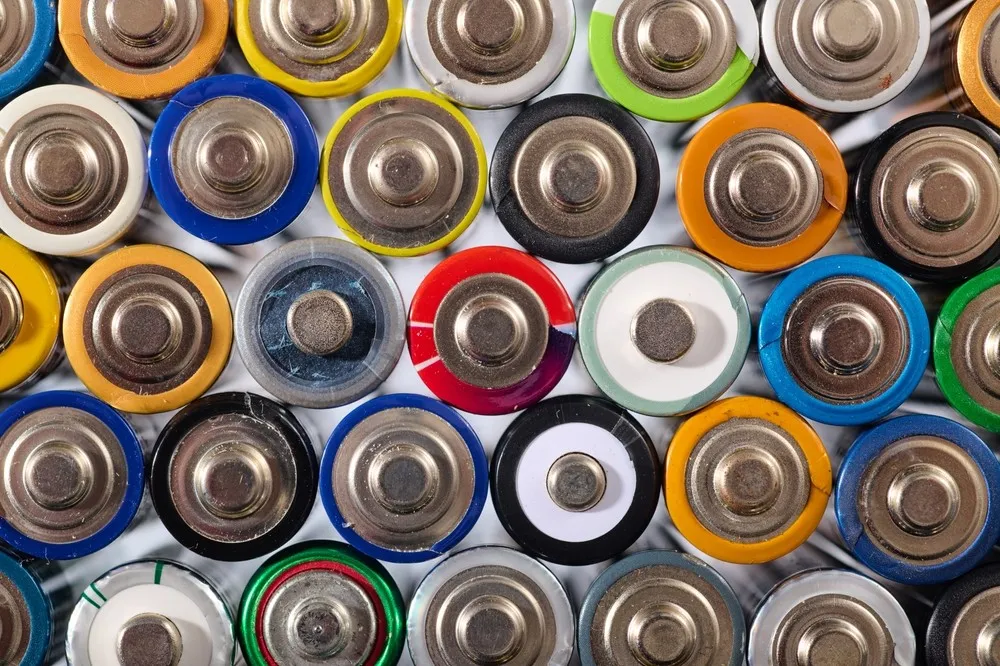
The EU Battery Regulation does something no other jurisdiction has done: it sets mandatory minimum recycled content for new batteries. Not a collection target, not a recovery rate — a requirement that the material inside a new battery was previously inside an old one.
From August 2031, new EV, industrial and SLI batteries must contain at least 16% cobalt, 6% lithium and 6% nickel from recycled sources, and 85% recycled lead. From 2036 those rise to 26% cobalt, 12% lithium and 15% nickel.
It is the most serious circularity instrument written for any product. It also asks, on one metal, for more material than Europe will have.
The arithmetic
A peer-reviewed study modelled whether the EU could meet the 2031 targets from its own end-of-life batteries, treating the bloc as a self-sufficient market. The collection rates required:
- Lithium: 42.5%
- Cobalt: 44.2%
- Nickel: 124.9%
A collection rate above 100% is not an ambitious target. It is a statement that the material does not exist to be collected.
The reason is timing rather than negligence. Recycled content has to come from batteries that have reached end of life, and the EV fleet that would supply it is still being driven. Cars sold in the late 2020s do not become feedstock until the 2030s at the earliest, and battery lifetimes are getting longer, not shorter. The regulation sets a 2031 deadline against a material flow that arrives later.
The regulation already knows
The clearest evidence that this was understood during drafting is in the text itself. The lithium target can be amended by delegated act, explicitly on the basis of “market and technological developments” and the availability of lithium.
A target with a built-in revision clause tied to whether the material exists is a target the drafters expected to revisit. That is more honest than most instruments manage, and it is also an admission.
The method for counting it is late
Here is the part that is live right now.
A target for recycled content means nothing without a rule for how recycled content is calculated and verified. That rule is a delegated act, and it was due for Commission adoption by 18 August 2026.
It has not been adopted. A draft went out for a four-week feedback period on 12 August 2026, and adoption has since been indicated for October 2026. As of publication we could not confirm an Official Journal entry for it, and we would treat the exact dates in trade coverage as unconfirmed — sources differ.
The contrast is instructive. The other methodology act, covering recycling efficiency and material recovery rates, was adopted on 21 March 2025 as Delegated Regulation (EU) 2025/606 and published that July. The rule for measuring what comes out of a recycling process exists. The rule for measuring what goes into a new battery does not, yet.
What the draft would require
The draft is demanding in a way that matters. Recycled content would be calculated per battery model, per manufacturing year, and per production facility — not as a corporate average.
That is the right design. A company-wide average would let a manufacturer offset a non-compliant line against a compliant one, which is the mechanism by which self-declared repair scores drift upward. Per-model, per-site accounting is harder to game, and harder to comply with.
It also covers industrial batteries above 2 kWh, EV, SLI and light means of transport batteries — a wide scope.
This is not the textile pattern
It would be easy to file this alongside Europe’s textile collection mandate, where collection was made compulsory and processing was not funded. That is not what is happening here, and the difference is worth being precise about.
The Battery Regulation legislates both halves. Collection targets for portable batteries rise to 63% by the end of 2027 and 73% by the end of 2030, from 45% in 2023. Light means of transport batteries get their own targets, 51% by 2028 and 61% by 2031. Recovery efficiency is mandated too: lithium recovery of 50% by 2027 and 80% by 2031.
So the supply side is not an afterthought. Someone thought about where the material would come from, wrote targets for collecting it, and wrote targets for recovering it once collected.
The failure mode is different. Textiles was an omission. Batteries is a physics and timing problem: every part of the system is legislated, and one input still cannot arrive in time because the product has not worn out yet.
What to watch
- Whether the recycled-content methodology act is adopted, and what it counts. Specifically whether per-model, per-site calculation survives industry feedback, or is softened to an average.
- Whether the lithium target is revised under the availability clause. If it is, watch whether nickel — the metal with the impossible number — gets the same treatment, because it has no equivalent clause.
- Imported recycled content. The study notes that non-EU producers and recyclers may satisfy the requirement without stimulating EU recycling at all. A target met by importing recyclate is met on paper.
The uncomfortable part
This is the best-drafted instrument we have looked at. It covers both ends of the loop, it specifies verification at a granularity that resists gaming, and it states its own escape clause in public.
And one of its headline numbers still requires collecting 125% of a metal.
The lesson is not that the drafters were careless. It is that a circular economy rule can be written correctly in every respect and still fail, because the material cycle it governs moves on a timescale that legislation does not control. A battery sold today decides what is available to recycle in 2035. The regulation can set 2031 targets; it cannot move the cars.
Sources: Regulation (EU) 2023/1542 for the recycled content, collection and recovery targets and the lithium revision clause; Commission Delegated Regulation (EU) 2025/606 for the adopted recycling-efficiency methodology; published trade coverage and the Commission’s feedback portal for the status of the draft recycled-content methodology act, where dates differ between sources and adoption was unconfirmed at the time of writing; and a peer-reviewed study of EU end-of-life battery volumes for the required collection rates. Note that summary sources disagree on the 2025 recycling efficiency figures for lithium-based batteries; we have not relied on them here.