Nvidia's New CPU Is for Servers. What It Threatens Is the Secondhand Laptop Market.
On 19 October, Reuters reported that Modal — a cloud company that rents computing power to AI developers — will begin running AI agents on Nvidia’s new Vera processor. Modal had previously run that work only on Intel and AMD chips. Early tests, the company said, doubled the amount of work its agents could finish. It is keeping its existing fleet and will route each job to whichever silicon handles it best.
Vera is an 88-core data centre CPU. It will never appear in a laptop. Nvidia has told investors it expects at least $20 billion of Vera sales this fiscal year, and Modal, which recently raised $750 million at a $15.75 billion valuation, is one customer among several.
So the direct impact on the laptop industry is zero. The indirect impact is larger than most laptop announcements this year, and it points in two opposite directions at once.
The case against your next laptop
The pitch for an AI PC is that intelligence has to be local. Microsoft’s Copilot+ tier requires a neural processing unit rated above 40 TOPS, 16 GB of memory and 256 GB of storage — a specification that disqualifies essentially every laptop sold before 2024, including machines that are fast, healthy and paid for.
The Modal story is evidence for the opposite proposition. The agentic workloads that the AI PC was supposed to justify are being bought wholesale, by the hour, from companies renting 88-core server CPUs. If the long-running work happens on Vera in somebody else’s data centre, the machine in front of you is holding a browser session open. A 2019 ThinkPad does that.
This is not an argument that on-device inference is pointless. It is genuinely better for privacy, for working offline, and for anything where a metered API call per keystroke would be absurd. But it is a much narrower case than the marketing makes, and the direction of travel in the Modal announcement is away from the device.
The industry is selling the other way regardless. TrendForce expects AI notebooks to go from 6.8% of shipments in 2025 to 14.5% in 2026 — a replacement cycle built on a capability that is simultaneously being centralised.
The case for replacing it sooner than you planned
The second effect runs the other way, and it is the one with a track record.
Vera is an Arm chip. Its adoption by a company that had standardised on x86 is a small but real data point in a transition that has already reached laptops through Apple silicon and Qualcomm’s Snapdragon X. Architecture transitions are the most reliable destroyer of working hardware we have on record, because they end the software contract while the hardware is still fine.
Two precedents, both current:
Windows 10 support ended on 14 October 2025. Canalys forecast in 2023 that roughly 240 million PCs would be incompatible with Windows 11 — about 480 million kilograms of hardware — and said that incompatibility sharply reduces what those machines are worth to refurbishers. That was a forecast made two years ahead of the deadline. No measured count of what actually happened has been published.
Apple is finishing its own transition now. macOS 27 will not install on Intel Macs, and the installer removes Rosetta 2, the translation layer that let Intel software run on Apple silicon. Apple has committed to three further years of security updates for Intel machines. A top-end MacBook Pro bought in 2019 cost well over $2,000 and will be outside the operating system within seven years, with no hardware fault involved.
In both cases the laptop still works. What expires is support — and resale value tracks support, not condition. It does not decay gently. It falls on a date.
How fast this is actually happening
Slower than the headlines suggest, which is good news if you own an x86 laptop.
TrendForce puts Windows on Arm at roughly 4–6% of the PC market and says it has not gained meaningful ground. Qualcomm’s chief executive has projected 50% by 2029. Those two numbers are not close to each other, and only one of them is a measurement.
Nvidia’s own consumer part makes the point. The N1X, its Arm laptop SoC, has slipped from the second half of 2025 into 2026 and, according to leaks, to limited availability in 2027. Much of what is reported about it is not confirmed by anyone who would have to stand behind it.
That gap — between Vera shipping in volume and an Nvidia chip in a consumer laptop — is itself the lesson. Modal said supporting Nvidia’s design would require significant software changes on its side, and Modal can make them, because it controls its whole stack. You cannot rewrite your software catalogue. Servers change architecture years before consumers do, for that reason alone.
The repairability problem that travels with it
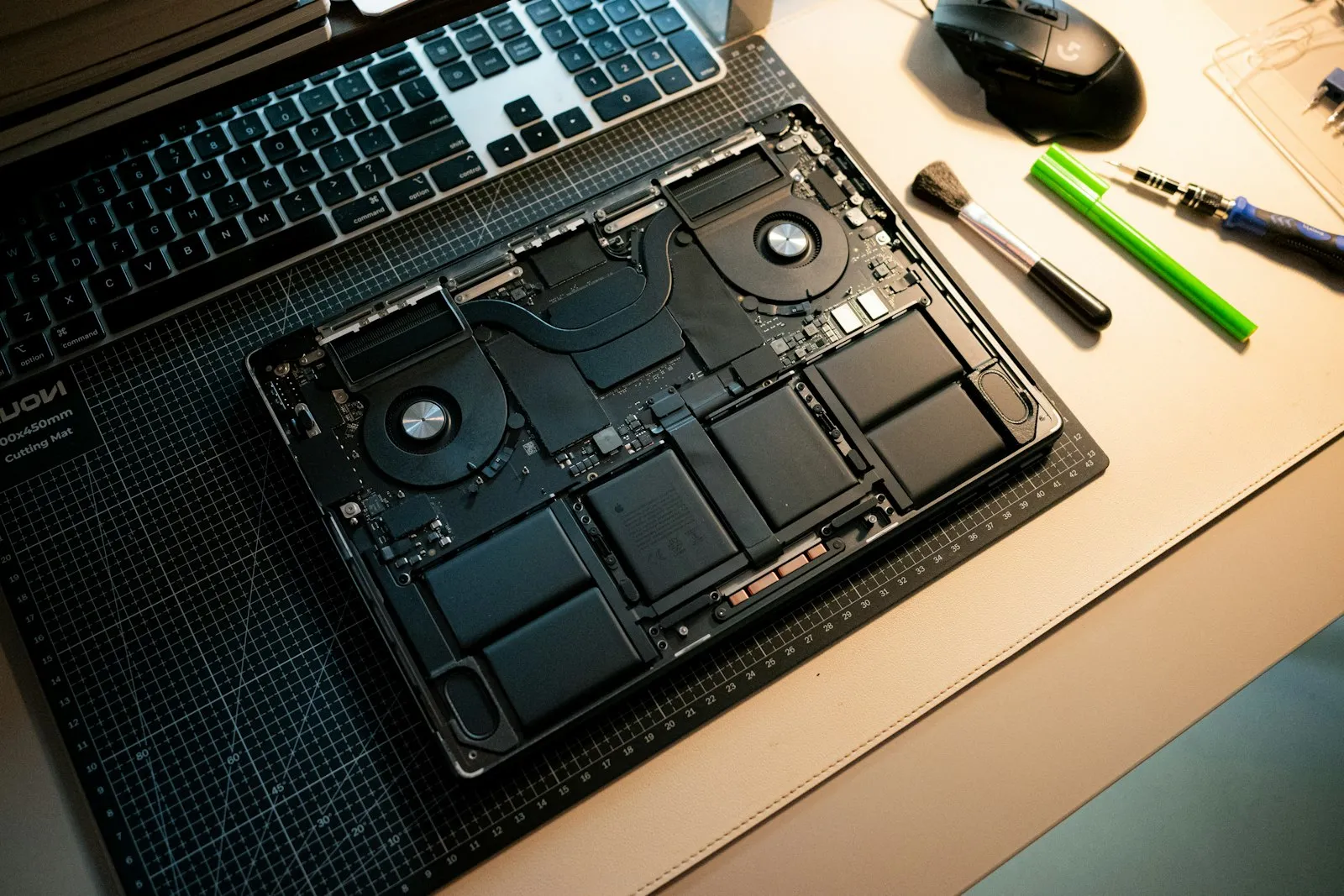
Arm laptops as currently designed put the memory on the package with the processor. That is a design convention rather than a property of the instruction set, but it is the convention across Apple silicon and Snapdragon X, and Nvidia’s rumoured part is expected to follow it.
What that costs is the cheapest life-extending repairs there are. A RAM upgrade or an SSD swap can keep a laptop useful for years at a fraction of replacement cost, and both disappear when the memory is soldered beside the die. A failed component stops being a repair and becomes a new laptop. The right to repair laws now in force in several states do not reach a decision made at the silicon level.
Nobody is counting
There is no statistic for how many working laptops are retired because their software support ended rather than because they broke. No agency collects it. The 240 million figure everyone cites is a commercial forecast from 2023, and the deadline it described passed a year ago without a published count following it.
This is the same wall we hit writing about America’s e-waste recycling rate, last measured in 2018, and about the secondhand phone market, where commercial estimates of the same thing disagree by factors. The largest driver of replacement in consumer electronics is a software decision, and it is unmeasured.
What this means if you are buying
Do not replace a working laptop to get AI. The Modal announcement is evidence that the demanding work is moving to rented silicon. A thin client with a good screen and a long battery is a defensible 2026 purchase. A replacement cycle justified by on-device agents is not.
If you are buying Arm, check your actual software list, not a compatibility claim. Translation layers are a transitional promise, and Apple’s is being withdrawn on a published schedule.
Sell or trade in while the value exists. Resale prices track software support, so the worst moment to sell is just after an end-of-support date rather than just before it. Buyback services such as Gadget Salvation quote on used machines, including damaged ones that peer-to-peer markets will not take.
Upgrade the x86 machine you already have. While the memory and the drive are still sockets rather than solder, they are the cheapest years you will ever buy.
The uncomfortable part
The most circular outcome of the entire AI build-out would be hundreds of millions of ordinary laptops lasting longer because the heavy work moved to a data centre. That outcome is plausible, it is visible in the Modal story, and nothing in the industry’s incentives rewards anyone for saying it out loud.
Running alongside it is an architecture change that will strand working machines on a timetable set by operating system vendors rather than by wear. Both effects are real, they pull in opposite directions, and we cannot tell you which one is larger, because the number that would settle it has never been collected.
Sources: the Modal and Vera details are from Stephen Nellis, Reuters, 19 October 2026; Modal’s performance claim is the company’s own, made against Intel and AMD parts already on the market, and Reuters notes both rivals have newer designs in development. Windows on Arm and AI notebook shares are from TrendForce. The 240 million PC figure is a Canalys forecast published in 2023 and is reported here as a forecast. Apple’s Intel and Rosetta 2 timeline is as reported by AppleInsider and MacRumors, which differ on how much of Rosetta survives past macOS 27. The Nvidia N1X schedule rests on leaks rather than announcements and is flagged as such.